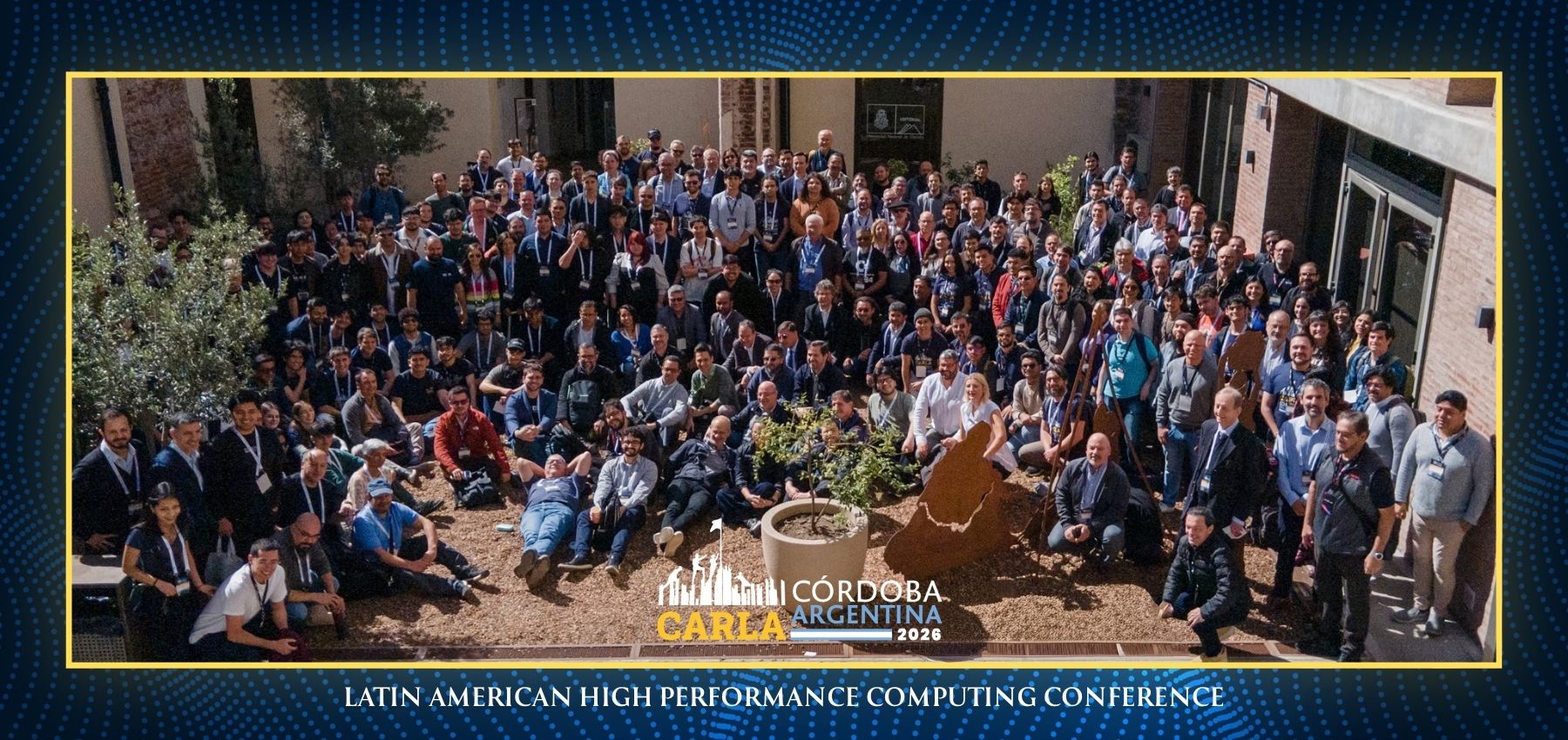
The conference brought together members of academia, industry, and the student community from 28 countries for training activities, a student competition, keynote talks, and panels on the future of high-performance computing in Latin America.
The Latin American High Performance Computing Conference, CARLA 2026, was held successfully in Córdoba, Argentina, from September 21 to 25, 2026. The event was led by Nicolás Wolovick of the National University of Córdoba (UNC) and welcomed 403 registered participants.
Participants included 152 people from academia, 113 students, 47 industry representatives, 52 DevOps School for HPC participants, and 39 Student Cluster Competition participants. Gender registration data showed 85 women, 313 men, one non-binary person, and four people who preferred not to disclose their gender.
Attendees from 28 countries took part in this edition. Argentina, the host country, welcomed participants from Brazil, Colombia, Chile, the United States, Mexico, and other countries across the region and around the world.
Keynotes and invited talks
The program featured keynote talks by Florina Ciorba, Stefano Cozzini, and Jean-Yves Berthou, covering HPC performance, high-performance computing education and training, and Europe’s strategy for the post-exascale era. Cozzini presented “A 20 Years Journey in HPC Training and Education: From FLOPS to Data.”
Invited speakers also included María Isabel Pedraza, who spoke about HPC in CMS and data from the LHC; Luiz Fernando Bittencourt, who discussed resource allocation in the Computing Continuum; and Anshu Dubey, who addressed the modernization and optimization of legacy simulations.
Panels on the region’s future
Four panels explored strategic challenges and opportunities for the community:
- Exascale Infrastructure for LAC, moderated by Carlos Jaime Barrios Hernández, with Isidoro Gitler, Paola Buitrago, Luiz Fernando Bittencourt, Raúl Riera, and Fabio Alves.
- High-Performance Computing as a Regional Catalyst: Policy, Finance, and Collaboration, moderated by Salma Jalife, with Philippe Navaux, Martín Olmos, André Rafael, Raúl Rivera, and Luis Eliécer Cadenas.
- Urban AI in Latin America: Building the AI Ecosystem for the Cities of Tomorrow, moderated by Hugo Hernández, with Nelson Enrique Vera Parra, Martín Olmos, Oscar Carrillo, and Leandro Neumann Ciuffo.
- HPC & AI Sovereignty, moderated by Esteban Hernández, with Isidoro Gitler, Nayat Sánchez-Pi, Leandro Neumann Ciuffo, and Rodrigo Durán.
Student Cluster Competition
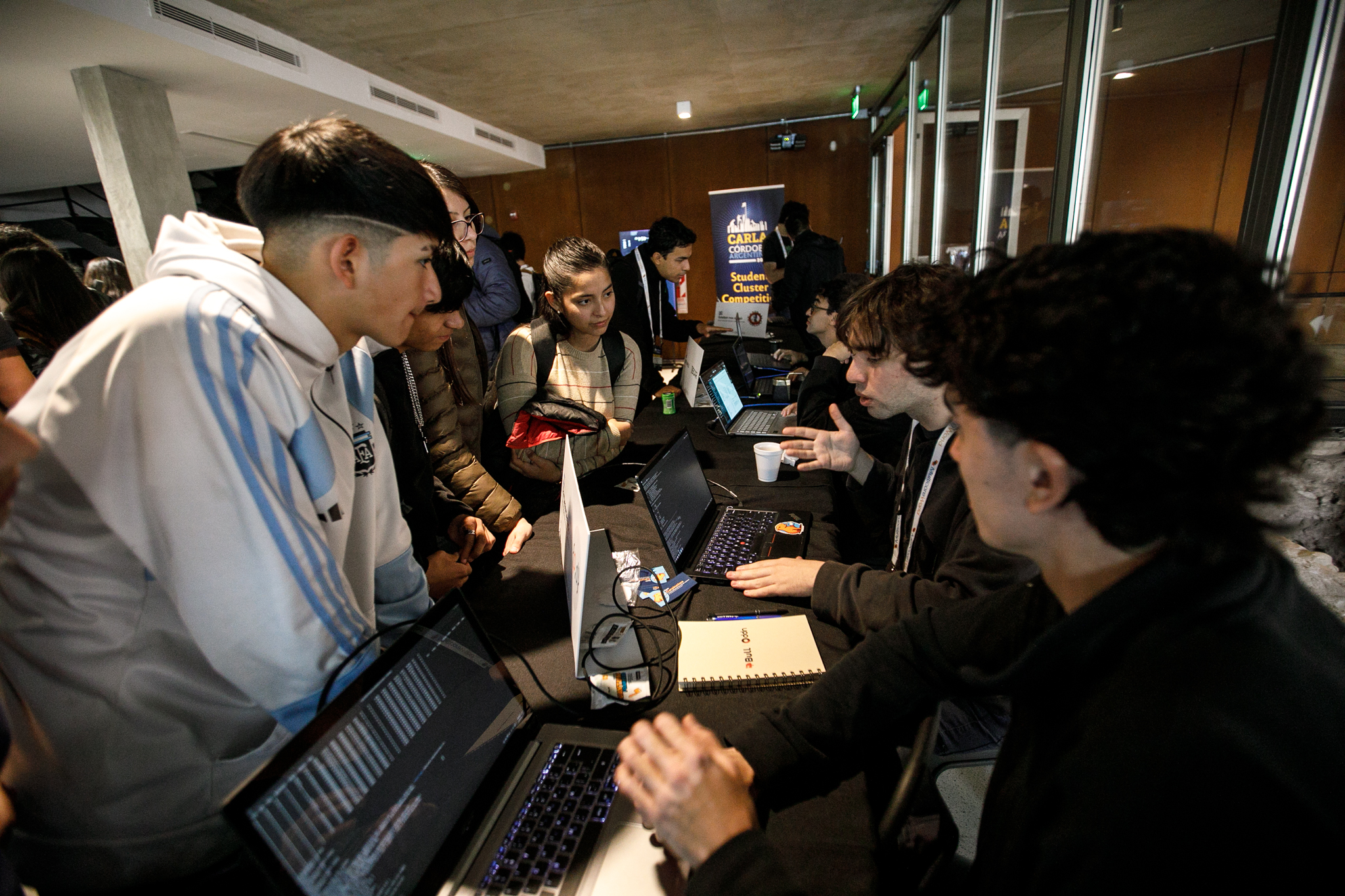
For the first time, CARLA hosted the Student Cluster Competition (SCC), with 12 teams registered. Each team consisted of three students and one supervisor, and the challenge was to achieve the best possible HPL score. The test was run on a 24-node Helvetios chassis, with three nodes assigned to each team. The chassis was positioned next to the teams, and the roar of its fans could be heard as the nodes were pushed to full load.
The winning team, Par Desordenado from the National University of Córdoba, achieved 5.11 TFLOPS, compared with a theoretical peak performance (Rpeak) of 5.184 TFLOPS. This represents an efficiency of approximately 98.6%, an outstanding result.